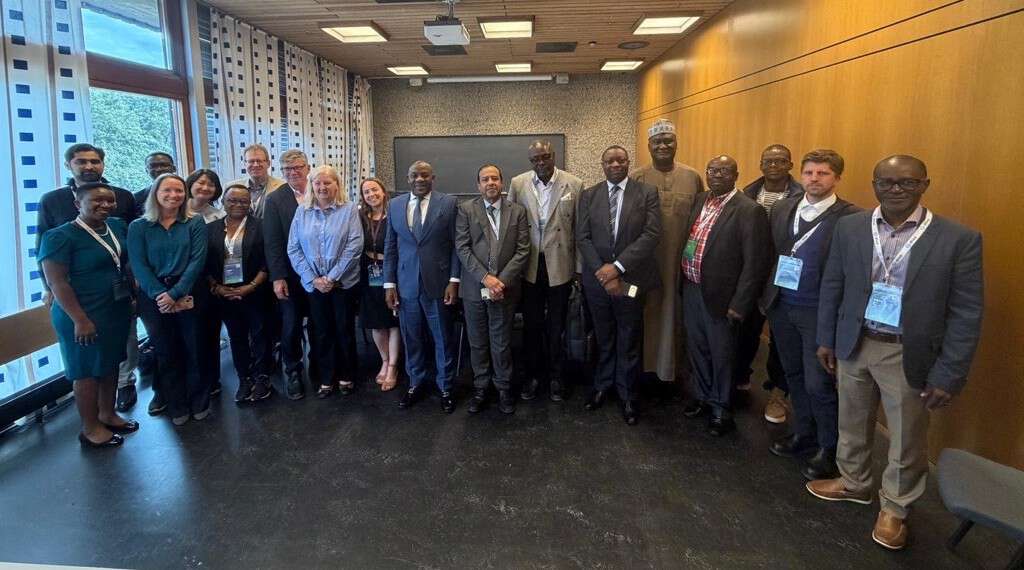
Through the Continental Education Strategy for Africa (CESA), the African Union seeks to strengthen education systems as a foundation for human capital development and the aspirations of Agenda 2063. Increasingly, the focus is shifting from data collection alone towards ensuring that information supports effective governance, quality assurance and evidence-based decision-making across the education sector.
The roundtable brought together high-level representatives from governments including Hon. Dr. Tunji Alausa, Minister of Education of Nigeria, alongside representatives from the Ministries of Education of Sierra Leone and Lesotho, the African Union, UNESCO Institute for Statistics (UIS), UNICEF, HISP and Global University Academy. The discussions explored how digital public goods and national data systems can contribute to more effective, resilient and sustainable education systems, and was moderated by Sophia Kousiakis at DHIS2.
Turning information into action
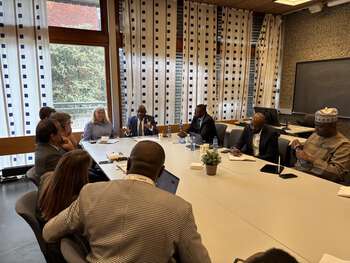
While the discussions focused on education data systems and digital public goods, a common message emerged: data are valuable not simply because they are collected, but because they support better decisions, stronger institutions, and nationally owned education systems. Participants emphasized that information should be viewed not as an end in itself, but as a tool for leadership, planning and accountability. Moving beyond short-term projects and donor dependency towards sustainable systems requires partnerships, interoperability and local ownership, alongside investments in the human and institutional capacities needed to turn information into action.
Several participants highlighted the importance of shifting attention from collecting data to using data. Education Management Information Systems (EMIS) are increasingly recognized not only as repositories of information, but as management tools that enable governments to monitor progress, allocate resources, identify gaps and improve educational outcomes. Sustainable solutions, participants noted, depend on building national capacities and institutions capable of owning and governing both the systems and the data they produce.
The Pan-African Institute for Education for Development
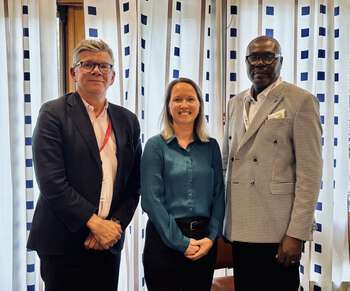
These themes were further explored in a meeting between Global University Academy Chairman and former President of the University of Oslo, Svein Stølen, Secretary General Marianne Knarud, and Adoumtar Noubatour from the Pan-African Institute for Education for Development (IPED), a specialized institution of the African Union that serves as Africa's Education Observatory. IPED plays a central role in monitoring progress under CESA and supporting policy dialogue, research and knowledge-sharing among African Union member states and partners. Through this work, it contributes to the continent's broader ambitions for intellectual capacity-building, innovation and sustainable development.
Throughout both conversations, participants repeatedly returned to the importance of partnerships. Whether in the development of digital public goods, the strengthening of national data systems, or the expansion of educational opportunities, sustainable progress depends on collaboration among governments, regional institutions, universities and international organizations.
Inclusive, resilient and future-oriented education systems
For the Global University Academy, these discussions resonate strongly with our own mission. As Africa hosts a large proportion of the world's forcibly displaced populations, expanding access to quality higher education and skills development will require strong partnerships and resilient institutions. Higher education is increasingly being recognized not only as an education intervention, but as a strategic investment in human capital, self-reliance and development.
The Global University Academy looks forward to continued dialogue and collaboration with partners across the African Union ecosystem in support of inclusive, resilient and future-oriented education systems and the shared ambitions of SDG 4 and Agenda 2063.